
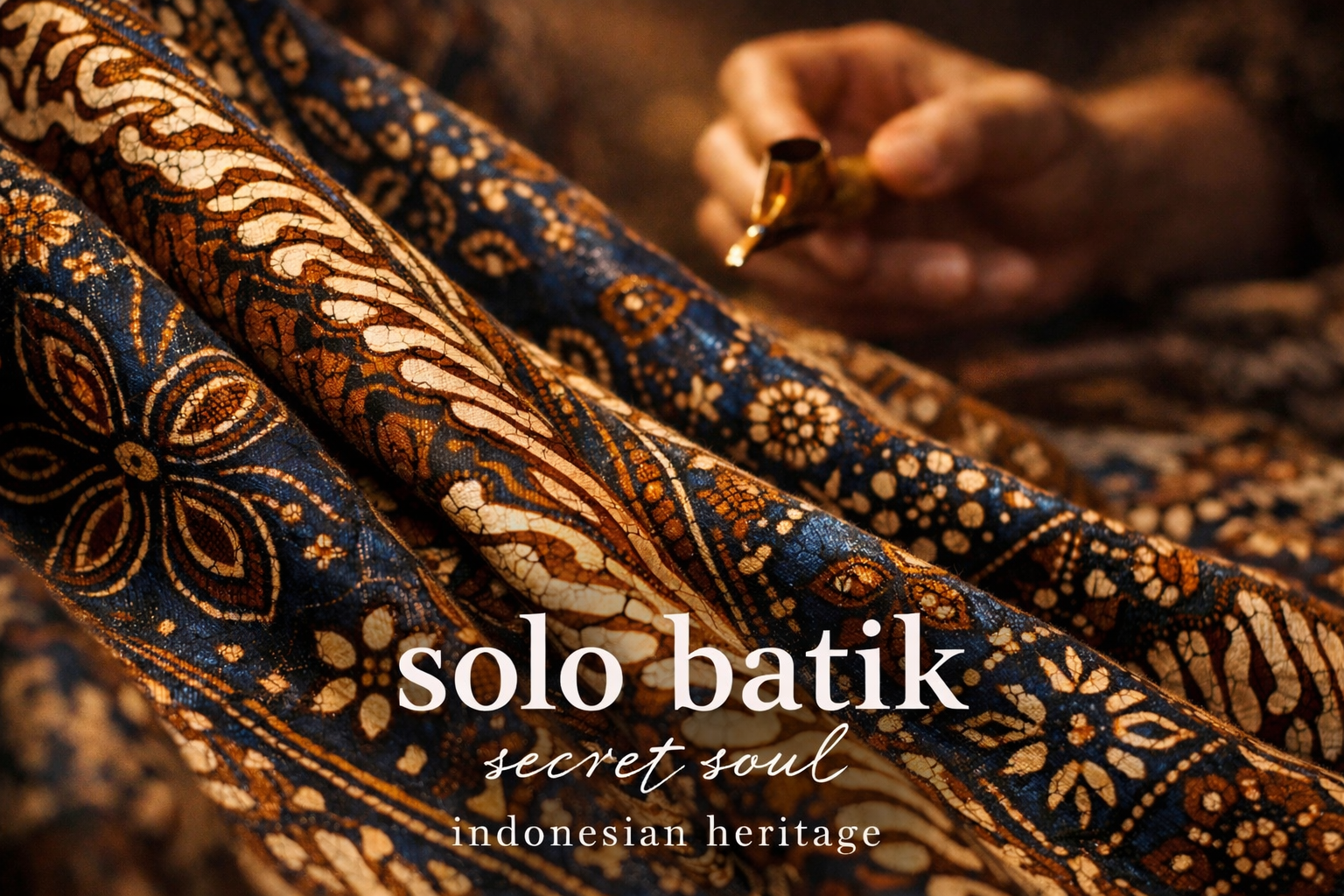
The Secret Soul of Solo Batik: A Timeless Tapestry of Indonesian Heritage
Batik, an art form synonymous with Indonesia, is far more than just patterned fabric. It is a living canvas, a repository of stories, prayers, and the profound history of a nation. Among its many celebrated styles, Solo Batik stands out, not merely for its intricate designs but for the very soul woven into each thread. In a world increasingly driven by mass production, Solo Batik remains a testament to meticulous craftsmanship and a deep spiritual connection. It's not just "cloth"—it's a masterpiece, a timeless tapestry of Indonesian heritage waiting to be unraveled. For international buyers seeking genuine cultural artifacts, understanding the secret soul of Solo Batik is the first step to appreciating its true value.
The Ancient Roots of Solo Batik
The city of Surakarta, more commonly known as Solo, in Central Java, is one of the epicenters of Batik tradition. Its history is inextricably linked to the powerful Javanese kingdoms, particularly the Kraton Surakarta Hadiningrat. Batik from Solo carries a distinct aristocratic elegance, reflecting centuries of royal patronage and philosophical depth. Originally reserved for royalty and nobility, the art form slowly diffused into the wider community, yet its regal essence remains.
A Royal Legacy: Kraton Influence
The Kraton (royal palace) played a pivotal role in the development and preservation of Solo Batik. Within its walls, dedicated artisans, often female members of the royal court, perfected the techniques and motifs. These patterns were not random; they were imbued with philosophical meanings, spiritual protection, and social status. The very act of creating Batik was a meditative process, a form of devotion that ensured the patterns carried potent symbolism. This royal patronage fostered a sophisticated artistic tradition, establishing Solo Batik as a benchmark for quality and symbolic richness. The meticulous standards set by the Kraton continue to influence contemporary Solo Batik artisans, ensuring the continuity of this precious heritage, making it a cornerstone of *Indonesian heritage fashion*.
The Philosophy Behind the Patterns
Every line, dot, and motif in Solo Batik tells a story, often drawing from Javanese philosophy, Hindu-Buddhist mythology, and Islamic teachings. These patterns are not merely decorative; they are prayers, hopes, and reflections of the Javanese worldview. Understanding the *Batik patterns meaning* unlocks a deeper appreciation for each piece. * Parang Rusak: One of the most iconic and ancient motifs, often associated with Solo Batik. Its undulating, sword-like pattern symbolizes continuous struggle, unyielding spirit, and the flow of life. Traditionally, certain variations were reserved exclusively for the royal family, signifying power and leadership. The diagonal lines are said to represent waves of the ocean, signifying power and humility. * Kawung: This pattern, resembling cross-sections of a palm fruit or areca nut, symbolizes perfection, purity, and justice. It was historically worn by royalty, signifying wisdom and the four cardinal points. Its simplicity belies its profound meaning, representing the cosmic order and the eternal nature of life. * Sidomukti: Meaning "to achieve prosperity and well-being," this motif is often worn during weddings, symbolizing hopes for a prosperous and happy future for the couple. It typically features intricate floral or geometric designs, often with a golden accent, further emphasizing its auspicious nature. * Truntum: A pattern of scattered stars, symbolizing loyalty and eternal love. Often worn by the parents of the bride and groom during a wedding ceremony, it represents their guidance and blessing for the new couple, hoping their love will shine as brightly and eternally as the stars. These are just a few examples; countless other motifs carry equally profound significance, making each piece of Solo Batik a narrative in itself, truly embodying *traditional Indonesian textiles*.
The Art of Batik Making: A Meditative Craft
The creation of Solo Batik is a painstaking, multi-stage process that requires immense patience, precision, and artistic skill. It's a craft that embodies slow fashion, where each piece is a labor of love, often taking weeks or even months to complete, a true example of *handmade Indonesian crafts*.
Canting and Malam: Tools of Tradition
The heart of Batik lies in the resist-dyeing technique using *malam* (hot wax). The primary tool is the *canting*, a small copper pen with a bamboo handle, used to apply the molten wax onto the fabric. The *canting* comes in various sizes, with different spouts for drawing fine lines (*canting tulis*) or filling larger areas (*canting tembokan*). The artisan, known as a *pembatik*, meticulously draws the patterns by hand, ensuring the wax penetrates the fibers to resist the dye. This freehand drawing, often done without a prior sketch, is where the artist's skill truly shines, resulting in unique nuances in every piece. The smell of melting wax, the rhythmic sound of the *canting* scratching the fabric, and the focused gaze of the *pembatik* all contribute to the meditative atmosphere of a Batik workshop, highlighting the dedication to *Indonesian textile art*.
The Dyeing Process: Layers of Meaning
Once the wax resist is applied, the fabric is dyed. Solo Batik traditionally uses natural dyes derived from plants like indigo for blue, soga for brown, and various barks and leaves for other hues. The fabric is submerged in the dye bath, then dried. If multiple colors are desired, specific areas are waxed again, and the previous wax might be removed by boiling (a process called *lorod*), before another layer of dye is applied. This layering of wax and dye creates the characteristic depth and complexity of Batik. Each color application adds another dimension to the pattern, building up the story and meaning. The cracking of the wax during this process often creates fine lines known as *remukan* or *crackles*, a cherished imperfection that authenticates handmade Batik.
Solo Batik's Unique Identity
While Batik is widespread across Indonesia, Solo Batik possesses distinct characteristics that set it apart, contributing to its high *cultural significance of Batik*.
Distinctive Colors and Motifs
Solo Batik is renowned for its classic color palette, dominated by rich browns (often *soga* brown), deep indigo blues, and sometimes touches of cream or white. These earthy, natural tones evoke a sense of timeless elegance and connection to the Javanese landscape. The motifs are typically more refined and intricate, often featuring smaller, more detailed patterns compared to the bolder designs found in some coastal Batik. The emphasis is on elegance, harmony, and philosophical depth rather than vibrant, striking contrasts. The designs often flow seamlessly, creating a sophisticated visual narrative that speaks to a mature aesthetic.
Solo vs. Other Batik Styles
To truly appreciate Solo Batik, it's helpful to understand how it contrasts with other prominent Batik styles. For instance, coastal Batik (like from Cirebon or Pekalongan) is often characterized by its vibrant, multicolored designs and influences from Chinese and European cultures, reflecting its history as a port city. Yogyakarta Batik, while also from a royal city, tends to have a darker, more somber palette and more rigid, geometric patterns, often associated with strict court protocols. Solo Batik, while sharing a royal heritage with Yogyakarta, strikes a balance, offering a refined elegance with a slightly softer touch and a unique warmth in its brown hues, often referred to as "soga Solo." This subtle distinction makes Solo Batik a prized possession for connoisseurs of *Indonesian heritage*.
Beyond Adornment: Batik as a Cultural Chronicle
Batik, and particularly Solo Batik, is more than just a piece of clothing or decorative item. It is a living chronicle of Javanese culture, embodying traditions, beliefs, and the very spirit of the people.
From Ritual to Everyday Life
Historically, Batik was integral to various ceremonies and life stages. Specific patterns were worn for births, circumcisions, weddings, and funerals, each carrying protective or auspicious meanings. While its role in daily ritual might have evolved, Batik remains a powerful symbol of identity. It is worn during formal occasions, cultural events, and even integrated into modern fashion. The act of wearing Batik is a way of carrying history and cultural pride. It serves as a visual language, conveying messages about the wearer's status, origin, and intentions. This deep integration into the fabric of society elevates Batik beyond mere textile art; it is a cultural cornerstone.
Preserving a Living Heritage
In an era of rapid globalization, the preservation of traditional crafts like Solo Batik is crucial. Efforts are being made by local communities, cultural institutions, and conscious consumers to support *sustainable Batik production* and ensure the craft thrives. This includes promoting the use of natural dyes, fair wages for artisans, and educational initiatives to pass on the intricate skills to younger generations. By choosing authentic, *handmade Indonesian crafts*, buyers contribute directly to the livelihood of these skilled artisans and help safeguard a UNESCO-recognized Masterpiece of Oral and Intangible Heritage of Humanity. This commitment to ethical sourcing and cultural preservation resonates deeply in today's global marketplace, making Solo Batik an emblem of *ethical fashion Indonesia*.
Accessing Authentic Solo Batik with Favoyu
For international buyers captivated by the rich narratives and exquisite craftsmanship of Solo Batik, accessing authentic pieces can seem challenging. This is where Favoyu bridges the gap, offering a seamless and reliable pathway to Indonesia's finest traditional textiles. As your dedicated personal shopper service, Favoyu provides unparalleled *access to Indonesian products*, acting as your trusted partner on the ground. We understand that finding genuine, high-quality Solo Batik from local artisans requires local knowledge and a meticulous approach. Favoyu removes the complexities, allowing you to acquire these masterpieces with confidence.
How Favoyu Enhances Your Solo Batik Journey:
* Direct Communication with Sellers: We communicate directly with Solo Batik artisans and reputable sellers on your behalf, ensuring you get accurate information about the patterns, dyes, and history of each piece. * Personalized Order Placement: From specific motifs to desired color palettes, we help place your customized orders, ensuring your Solo Batik meets your exact preferences. * Warehouse Receipt and Quality Check: Once your Batik arrives at our secure warehouse, we conduct thorough quality checks, providing you with detailed photos to verify the craftsmanship and authenticity before international shipping. * Consolidation of Multi-Seller Orders: If you're acquiring various *Indonesian textile art* pieces from different artisans or regions, Favoyu can consolidate your orders into a single shipment, saving you time and shipping costs. * Reliable International Shipping: We handle all the logistics of international shipping, ensuring your precious Solo Batik reaches you safely and efficiently, wherever you are in the world. With Favoyu, you're not just buying a product; you're investing in a piece of *Indonesian heritage fashion*, supporting local communities, and acquiring a story woven into fabric. We empower you to explore the depths of *cultural significance of Batik* without the logistical hurdles.
Conclusion
Solo Batik is far more than a decorative cloth; it is a profound expression of Javanese philosophy, history, and artistic mastery. Each intricate pattern, each natural hue, whispers tales of ancient kingdoms, spiritual devotion, and the enduring human spirit. By understanding its *Batik patterns meaning* and the painstaking process behind its creation, we gain a deeper appreciation for its true value as a cultural treasure. Through services like www.favoyu.com, this secret soul of Solo Batik becomes accessible to a global audience, allowing international buyers to not only own a beautiful piece of art but also to connect with the vibrant heart of Indonesian heritage. Embrace the story, embrace the art, embrace Solo Batik.
#SoloBatik
#IndonesianHeritage
#BatikArt
#TraditionalTextiles
#HandmadeIndonesia
#CulturalFashion
#EthicalFashion
#SustainableBatik
#JavaneseCulture
#TextileArt
#Favoyu
#ShopIndonesia