
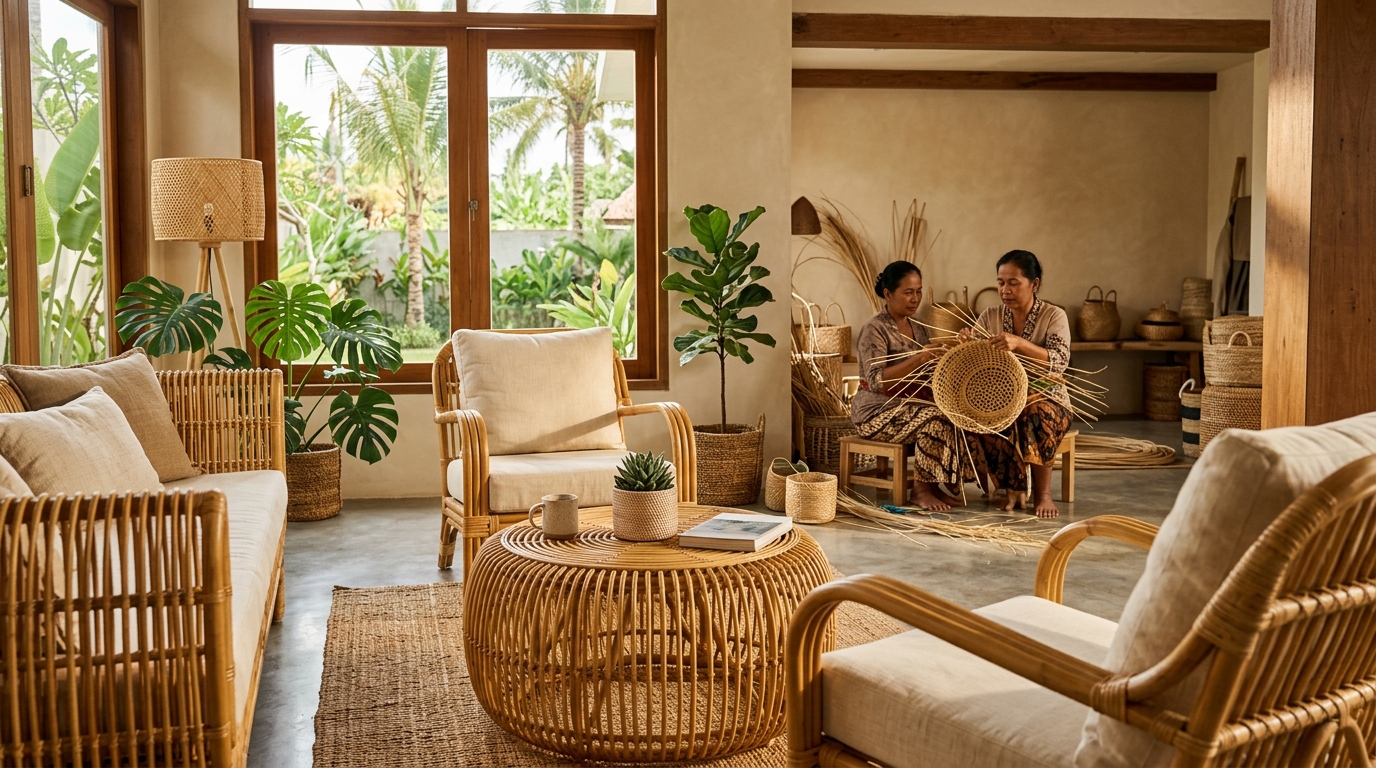
A Guide to Indonesian Rattan Crafts and Major Production Hubs
Indonesia is the worlds producer of rattan making up about 80% of the global supply. This flexible vine-like palm grows well in the rainforests across the country. It offers an alternative to timber and supports one of indonesias most lively craft industries. Rattan crafts are not just household items; they are a mix of knowledge, artistic expression and economic strength.
What Makes Rattan Special?
Rattan is known for being very durable, light and flexible. Unlike bamboo, which's hollow rattan has a solid core making it super strong and resistant to breaking. This lets artisans steam. Bend the material into complex shapes making everything from strong furniture to delicate home accessories. Also rattan is eco-friendly; it grows fast. Its harvesting helps keep the forests where it grows.
Key Rattan Producing Areas in indonesia
* Cirebon, West Java
Cirebon is known as the heart of the rattan industry. While the raw materials often come from islands Cirebon is the main hub for processing and manufacturing. The area is home to thousands of craftsmen and many factories that export high-end rattan furniture to Europe, America and Asia.
* Kalimantan (Borneo)
Kalimantan is a source of raw rattan because of its huge rainforests. However it is also famous for its weaving. The indigenous Dayak communities have used rattan for centuries to make backpacks, mats and hats.
* Sulawesi
Sulawesi is another producer of both raw material and craftsmanship. Areas like Palu and Gowa are known for making quality semi-processed rattan. The rattan from Sulawesi is often praised for its thickness and strength.
* Bali and Lombok
Bali and Lombok are important for the boutique market. These islands focus on appeal combining rattan with other natural materials like ata grass or wood for a unique look.
The Importance of the Industry
The rattan industry is a cornerstone of the economy providing livelihoods for millions of people—from forest farmers and gatherers to urban factory workers and designers. As the world moves toward living indonesian rattan continues to grow in popularity.
Whether it is a chair, in a Scandinavian home or a traditional woven mat in a local village indonesian rattan remains a symbol of natural beauty and human creativity.